Recently, the Japanese TBS news program “N Star” highlighted the record-breaking cold in Seoul, reporting on a unique experimental video filmed near the Han River that has since gone viral.
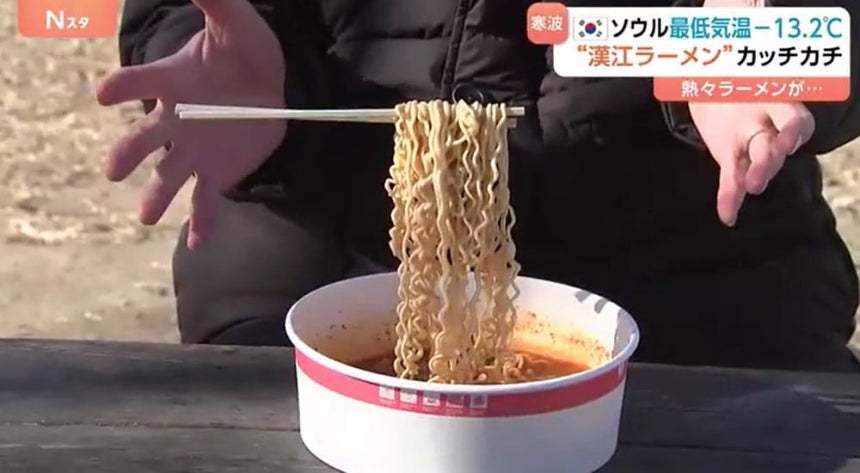
At the time of the report, the temperature in Seoul had plummeted to -13°C (8.6°F). The “Han River Ramen” that the reporter cooked outdoors froze solid within just two hours, with the noodles suspended mid-air. The reporter vividly conveyed the severity of the cold while observing the ramen, which resembled a time-frozen sculpture. This phenomenon is currently trending on social media as the “Frozen Ramen Challenge,” attracting global attention.
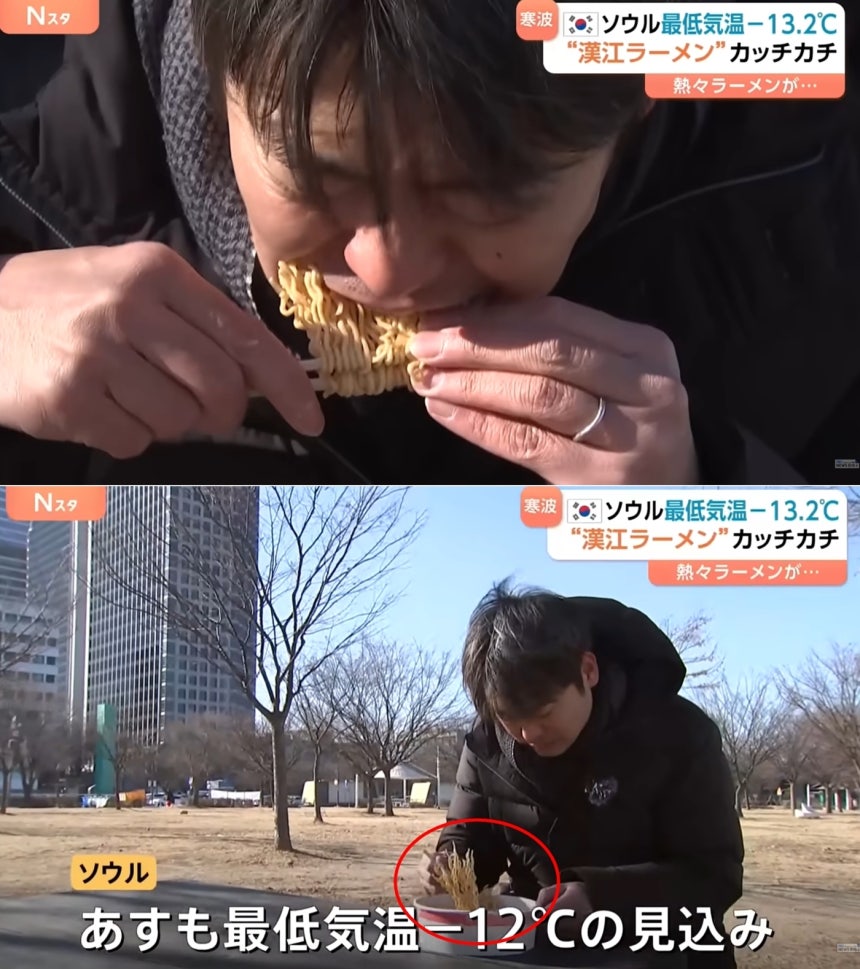
This cold wave in South Korea is expected to persist for the foreseeable future.
On Tuesday morning, January 27, 2026, temperatures are forecast to drop further to a low of -14°C (6.8°F), particularly in the central regions. Combined with cold air and strong winds, the wind chill factor will likely make it feel even colder than the recorded temperature.
Rain or snow is expected along the west coast starting from the early morning, and daytime temperatures in most central regions will remain below freezing, staying significantly lower than the seasonal average.

Currently, cold wave warnings are in effect for northern Gyeonggi and the mountainous areas of Gangwon.
The Korea Meteorological Administration (KMA) has warned that as temperatures drop further on the morning of the 28th, the warning areas are likely to be expanded or strengthened.
As the record-low temperatures cause fallen snow to freeze, increasing the risk of accidents on icy roads, thorough facility management and extreme caution regarding safety accidents are urgently required for residents and travelers alike.

 ONLINEKOREANEWS.COM
Leave a comment