Tag: K-culture

  • Busan Set to Achieve 3 Million Tourists, Thanks to APEC

    Busan is on track to become the first city in South Korea to reach 3 million foreign tourists in a single year. This shift in Korea’s tourism landscape, which was once centered around Seoul, is largely attributed to the APEC summit held in Gyeongju at the end of October. The summit wasn’t just another international event—it played a key role in creating a new tourism belt linking Busan and Gyeongju.
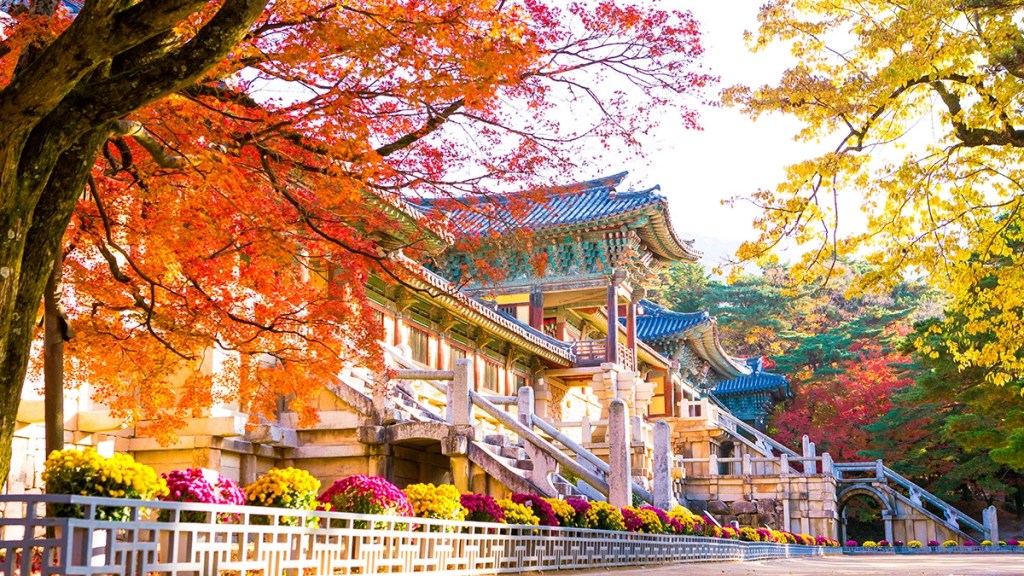
    Gyeongju Bulguksa Temple

    As of October 2025, the number of foreign tourists visiting Busan surpassed 2.35 million, setting a new record. The spending scale also grew by 33.2% compared to the previous year, reaching 6.594 trillion KRW. Notably, in October, the number of high-speed bus reservations for foreigners traveling between Busan and Gyeongju increased by 185% compared to the previous year. Most of these travelers were long-haul tourists from the US, Europe, and Australia, indicating a growing trend of “regional travel” connecting the two cities via Seoul.
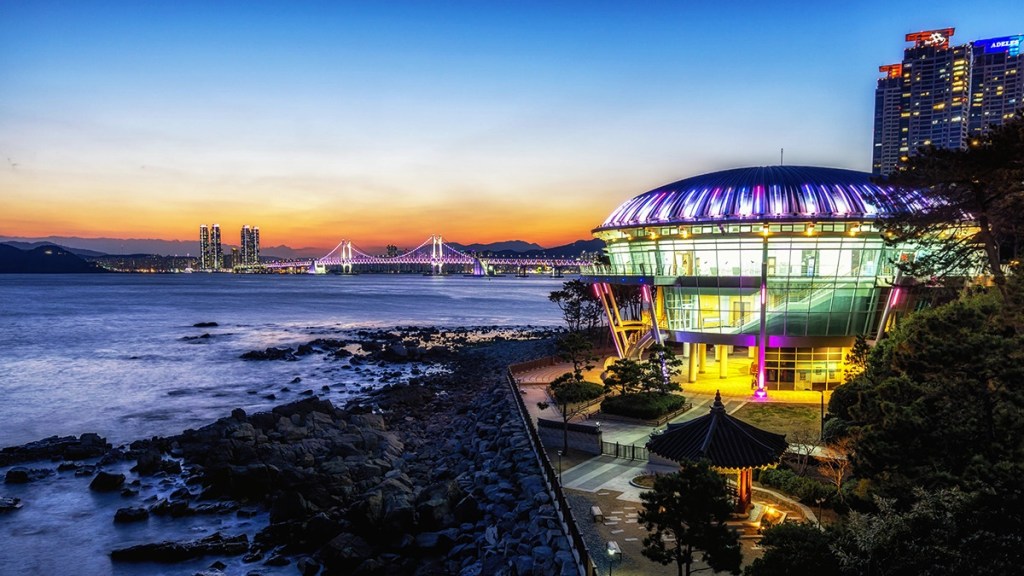
    Busan Nurimaru APEC House

    Experts are predicting that “this APEC summit has successfully merged Busan’s K-culture with Gyeongju’s K-heritage, creating the ‘most Korean regional tourism route’ and leaving a lasting impression worldwide.” They also forecast that Busan’s goal of 3 million tourists will be easily achieved.
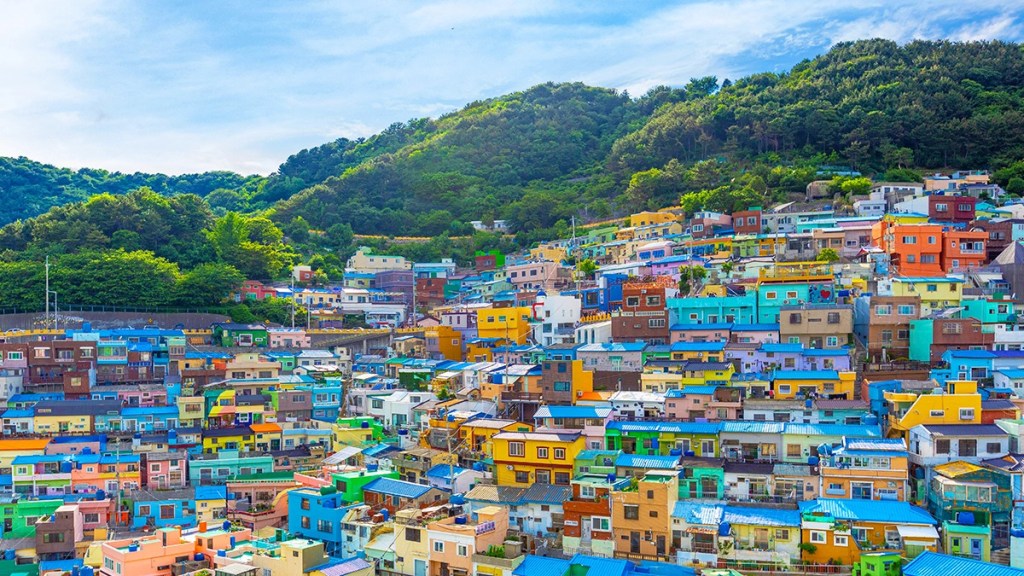
    Gamcheon Culture Village, Busan

    Furthermore, the successful “tourism alliance” between Gyeongju and Busan is seen as an important example of how international events in regions outside of Seoul can build a sustainable local tourism model.


  • Korea’s “Young Forty” Becomes a Target of Online Mockery

    Once celebrated in the mid-2010s as a declaration of “I’m still young,” the term “Young Forty” represented a generation of 40-somethings who embraced change and enjoyed trends. Seen as leaders in fashion, beauty, and wellness, they became a key consumer group for brands promoting messages like “style has no age.” The phrase “Young Forty look” became popular, symbolizing the idea that age was just a number.

    But recently, that positive image has turned sour.

    Internet memes like “Sweet Young Forty” have transformed the term into an object of ridicule. What once meant “middle-aged with a youthful spirit” now implies “someone desperately trying to look young.” Social media is flooded with parody content such as “acting young challenges” and “Young Forty fashion,” turning youth into a dividing line between generations. According to a CBS survey, 68.3% of respondents in their 20s and 30s viewed “Young Forty” negatively, and 75% first encountered the term through social media memes.

    This shift in perception has impacted the market as well. Brands that once marketed sneakers or luxury goods with “Young Forty appeal” now find themselves outdated in the eyes of younger consumers, leading to disengagement from that demographic.

    Experts interpret this phenomenon as a reflection of generational anxiety and identity competition. Professor Shim Jae-man of Korea University explained, “Younger generations are using humor to reinforce their youth by caricaturing middle age.” Professor Park Jung-min of the Korea National Open University added, “Some showy cases have been generalized to an entire generation, creating stigma. When memes are consumed as mere entertainment rather than social insight, they can deepen generational misunderstanding.”

  • Busan’s Young Artists Bring Art into Fashion and Food through Creative Collaborations

    The Busan Cultural Foundation has unveiled a new lineup of creative collaboration products through its “Busan Artist Tag” project, which fosters sustainable partnerships between local young artists and regional businesses.

    Now in its third year, the project supports young artists by linking their creative works with local brands — transforming artistic talent into tangible products that bridge art and industry. Participating companies pay copyright fees to the artists, while the foundation provides portfolio opportunities and production funding to sustain long-term collaboration.

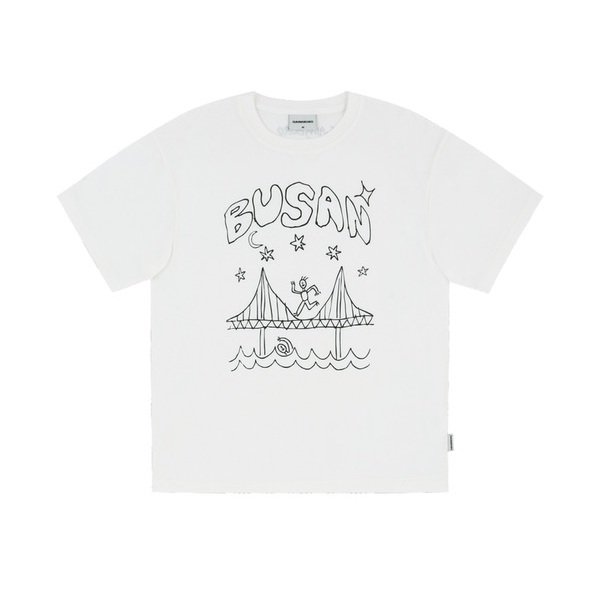
    This year’s collaborations include street casual brand Gainsboro and artist Kang Deok-hyun, who produced limited-edition T-shirts and art packages, as well as Gijang-based specialty brand Seed and artist Lee Yeon-seo, who launched a premium seaweed gift set. Notably, Kang’s graphic-art-designed T-shirts were presented as gifts to domestic and international delegates during the Busan Performing Arts Market (BPAM).

    The final collaborative products are now available at Connect Hyundai (Busan B1) and will be officially showcased at the 2025 Youth Culture Project Achievement Exhibition.

  • A Global Stage for Korean Culture: ‘Unboxing Korea’ Takes Over Belgium

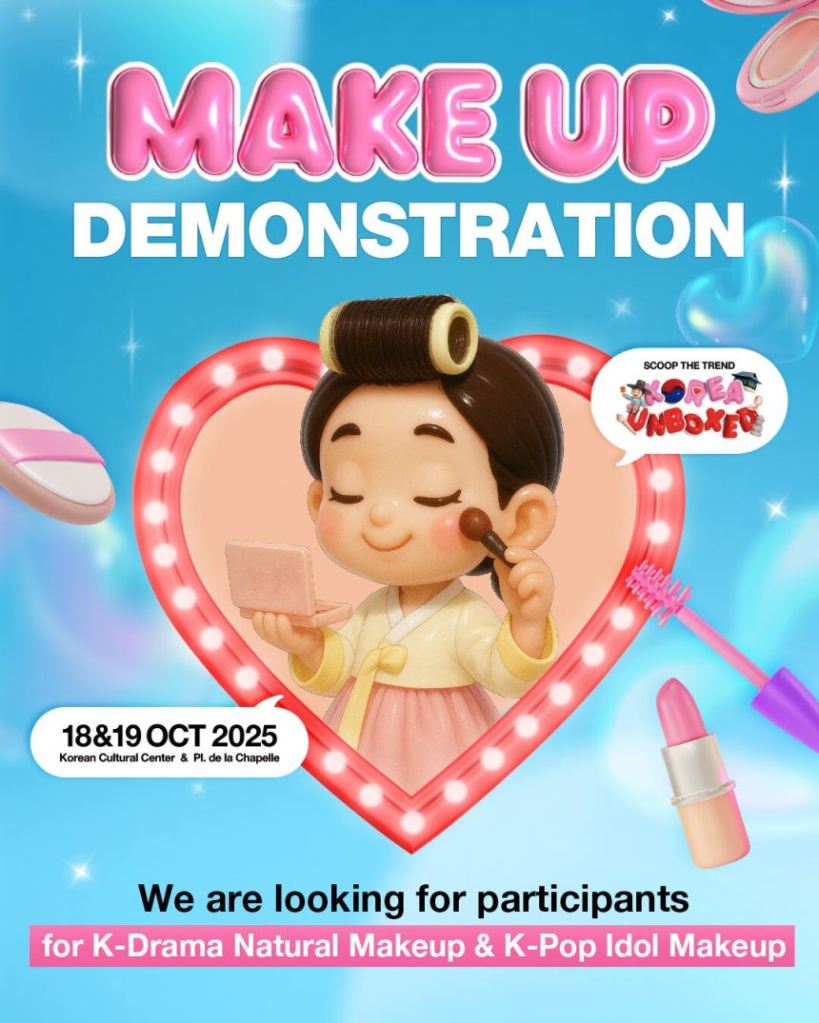
    The Korean Cultural Center in Belgium and the EU will host a large-scale cultural festival, “Unboxing Korea: Scoop the Trend,” in the heart of Brussels from October 18 to 19 (local time).

    Now in its second year, the festival offers visitors a chance to experience the full spectrum of Korean culture — from K-culture, K-beauty, and K-food to K-tourism — all in one place. The event aims to showcase both the emotional depth and industrial power of modern Korean culture.

    The festival will take place across two main venues.
    At the Korean Cultural Center, guests can explore the K-Beauty Zone and K-Tourism Zone, while Place de la Chapelle, one of Brussels’ most popular spots, will transform into the K-Culture Zone and K-Food Zone.

    A highlight of the K-Culture Zone will be the “K-pop Demon Hunters Zone”, created in collaboration with Netflix EU, where visitors can try on hanbok and traditional accessories for photo experiences. There will also be K-pop cover dance performances and traditional craft workshops, offering European audiences a hands-on taste of Korean creativity.

    At the K-Food Zone, Korean rice-based food companies will present tteokbokki, traditional liquor cocktails, and Korean-style desserts. The K-Beauty Zone will feature small and medium enterprises showcasing their products through personal color analysis sessions and live makeup demonstrations. The K-Tourism Zone will include Korean travel tarot readings, Jeju keyring crafts, and photo booth experiences.

    “Unboxing Korea” serves as more than just a festival — it’s a global cultural exchange platform that blends Korea’s artistic spirit with its contemporary lifestyle and industry trends.

  • From Luxury to Everyday — The Rise of Unmanned Flower Shops

    Unmanned flower shops are becoming one of Korea’s latest lifestyle trends — offering a convenient and comfortable way for anyone to buy flowers.

    Beyond reducing labor costs and enabling 24-hour operation, these shops have created a welcoming space where men can purchase flowers without hesitation. Traditional flower shops required on-site florists and higher operational costs, but automation has changed the landscape, making flower buying more accessible and affordable.

    The rise of male customers is particularly noteworthy. In a quiet, private space, men can choose flowers freely without feeling self-conscious. Ready-made bouquets, available through vending-style displays, lower psychological barriers and encourage spontaneous purchases. More men are now buying flowers for themselves or as small daily gifts — moving away from the old belief that “flowers are only for special occasions.”

    A prime example is Erfleur, an unmanned flower shop in Suwon, which embodies this new wave. With the slogan “Flowers, closer and more natural”, Erfleur combines a French-inspired interior with reasonable prices. Open from 7 AM to midnight, it restocks fresh flowers three times a week. Owner Seo Subin said, “I wanted to create a space where anyone can buy flowers, even late at night — especially a place where men can feel comfortable choosing them.”

    Unmanned flower shops are now evolving beyond convenience — becoming cultural spaces that represent emotional consumption and gender-neutral lifestyles in modern Korea.

  • UNESCO Recognizes Magoksa as a Cultural Heritage Site for Its Fall Beauty

    Magoksa, a temple with over a thousand years of history, is a sacred place that has endured through wars and disasters, retaining its original form, earning the title of “Ten Victory Lands”.

    Located at the foot of Mount Taehwa in Gongju, Chungcheongnam-do, Magoksa was founded in 640 by Jajang Yulsa during the reign of Queen Seondeok of Silla. Despite its long history, the temple has maintained its form and significance without much damage.

    In recognition of its unique value, Magoksa, alongside Beopjusa and Tongdosa, was inscribed as part of the “Mountain Monasteries of Korea” on the UNESCO World Heritage list in 2018. It is not only an ancient temple but also a living testament to the continuous tradition of Korean Buddhist practice since the 7th century. Visitors can experience the tranquility of a space infused with over a millennium of Buddhist spirit simply by walking through the temple grounds.

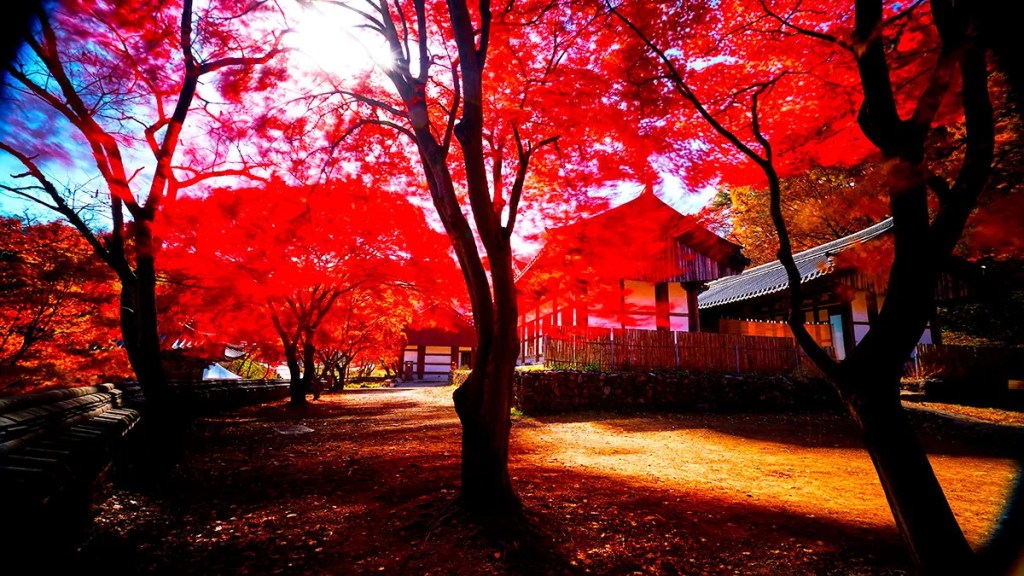
    During the fall, Magoksa transforms into another breathtaking landscape. From late October to early November, the red and yellow leaves of the trees color the Taehwa Stream, creating a scene that blends with the peaceful temple surroundings, like a traditional East Asian painting. With affordable entry fees, it’s a perfect destination to experience both history and autumn beauty.

  • From PLAVE to LUVITA: The Rise of K-pop’s Virtual Generation

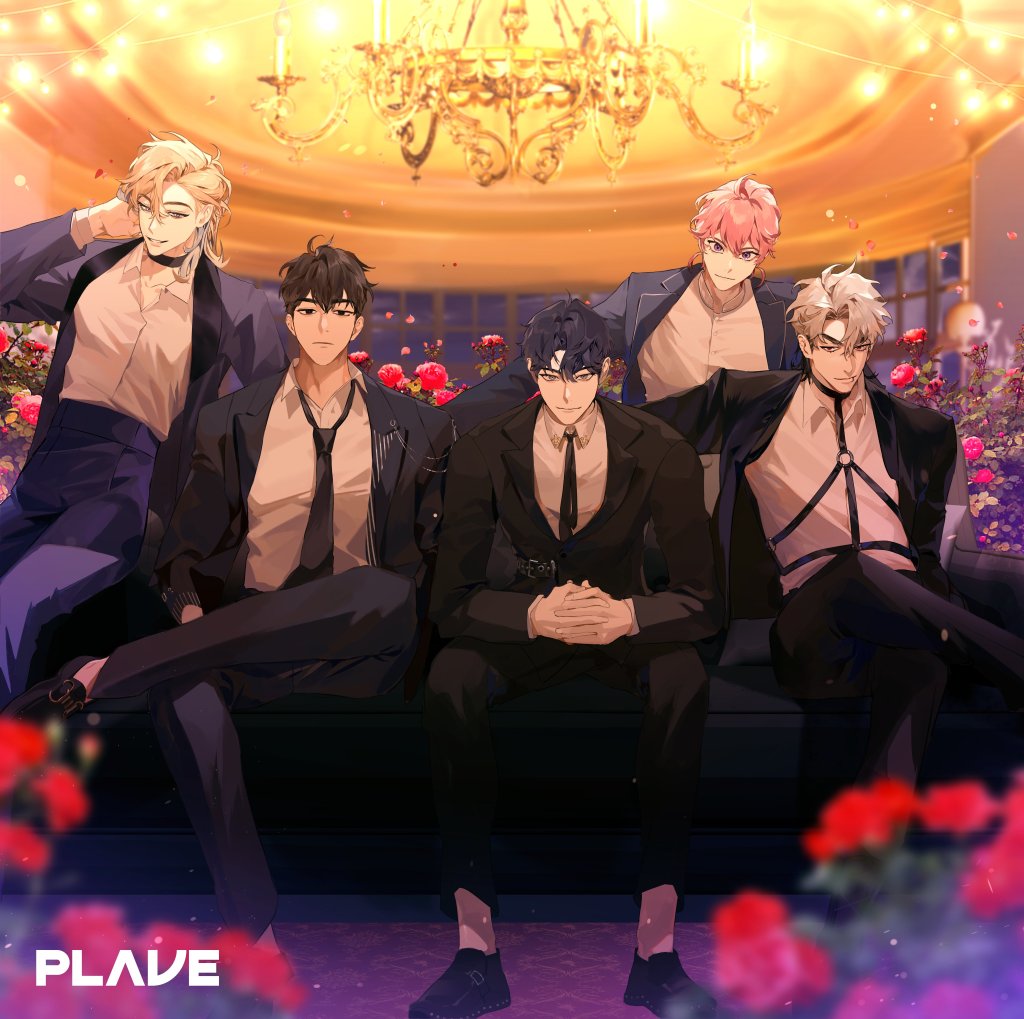
    The Netflix animated film “K-POP DEMON HUNTERS” has amplified the K-pop wave, bringing virtual idols into the spotlight as the new leading force in K-culture. Virtual idol groups like PLAVE and Isekai Idol are gaining immense popularity, leading to a shift in the K-pop fandom culture.

    Virtual idols engage with their fans in real-time through live streaming and virtual content platforms, strengthening their connections with audiences in a variety of spaces and formats. Fans interact with their favorite idols through offline concerts, merchandise sales, and immersive virtual content, building strong emotional bonds.

    Recently, the newly formed virtual idol group LUVITA, created in partnership with SOOP and Duribun, is set to make its official debut at the “MBC Virtual Live Festival with Coupang Play” in October. Alongside LUVITA, another group, PLAN B, garnered great praise for releasing high-quality tracks and videos utilizing AI and the metaverse.

    As virtual idol concerts sell out and merchandise flies off the shelves, this market is attracting attention similar to that of traditional K-pop idols. This growing success is expected to lead to even more K-pop virtual streamers making their debut in the future.

  • National Museum Brand MU:DS to Open Promotion Gallery in Hong Kong

    The National Museum Foundation of Korea (NMFK) will open a permanent MU:DS Promotion Gallery at the Korean Cultural Center in Hong Kong on October 11.

    MU:DS, the official brand of Korea’s National Museum, presents modern reinterpretations of key national treasures from institutions such as the National Museum of Korea. Recently, its Kedeheon collection has achieved remarkable popularity among MZ consumers, leading to multiple sellouts.

    Sales have grown from 6.1 billion KRW in 2016 to 21 billion KRW in 2024, marking a 3.5-fold increase. As of August 2025, revenue surpassed 21.7 billion KRW, and is projected to reach 30 billion KRW by year’s end.

    The new gallery will be located in PMQ, Hong Kong’s creative and cultural hub, with support from the Korean Cultural Center in Hong Kong.

    The grand opening will coincide with the “Korea Square 2025” festival, featuring exhibitions, live performances, and hands-on cultural experiences. The display will highlight 74 design products inspired by seven key themes — including the Pensive Bodhisattva, Baekje Incense Burner, celadon, white porcelain, mother-of-pearl crafts, and traditional calligraphy and paintings.

    Building on its Hong Kong launch, NMFK plans to expand into North America and Europe.

    In November 2025, the foundation will release a special product line in collaboration with the Smithsonian National Museum of Asian Art’s special exhibition “Korean Treasures: Collected, Cherished, Shared,” and will also participate in the 2025 Korea Wave Expo to engage with global consumers. Expansion into Europe is planned for 2026.

  • Korean Pop Art on Display in Hong Kong: Kitsch & Pop Exhibition

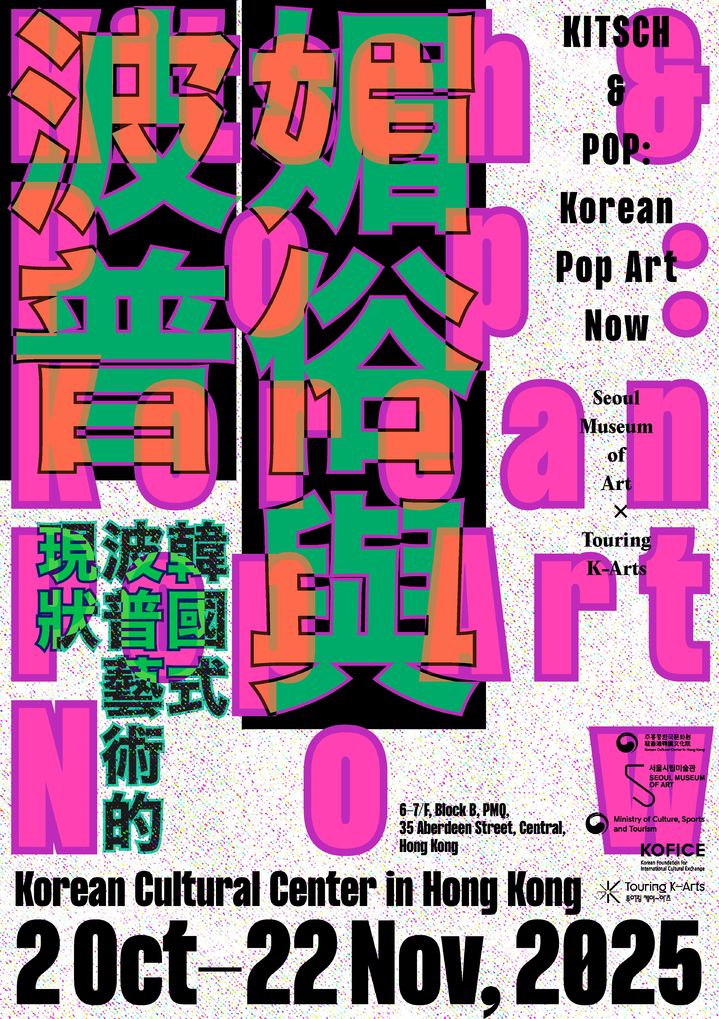
    The Korean Cultural Center in Hong Kong, in collaboration with the Seoul Museum of Art, will host the exhibition “Kitsch & Pop: The Present of Korean Pop Art” from October 2 to November 22.

    The exhibition is supported by the Ministry of Culture, Sports and Tourism and the Korea Foundation for International Cultural Exchange (KOFICE), as part of the “Touring K-Arts” project, which travels from Shanghai to Hong Kong.

    Its aim is to re-examine Korean pop art—relatively undervalued amid the global spread of K-pop and K-culture—within the context of contemporary art, while also introducing Korean culture through visual arts connected to music, fashion, film, and cuisine.

    The exhibition revolves around two key themes: “Individualized Pop” (Korean pop art contextualized within mass consumption, globalism, and postmodernism of the 2000s) and “Cool-Kitsch” (the creative sensibility of young artists in the age of the internet, SNS, and AI). It will showcase both new works by emerging artists active since the 2010s and pieces from the early-to-mid 2000s.

    The director of the Korean Cultural Center in Hong Kong stated, “This is a meaningful opportunity to showcase the experimental and creative spirit of Korean contemporary art at Hong Kong, a crossroads of international culture,” adding that the exhibition is expected to spark the global expansion of Korean pop art.