A special exhibition titled “Nam June Paik: Humanity in the Circuits” featuring 12 works, including major pieces and prints by Nam June Paik, is being held at the Wooyang Museum of Contemporary Art in Gyeongju, South Korea.
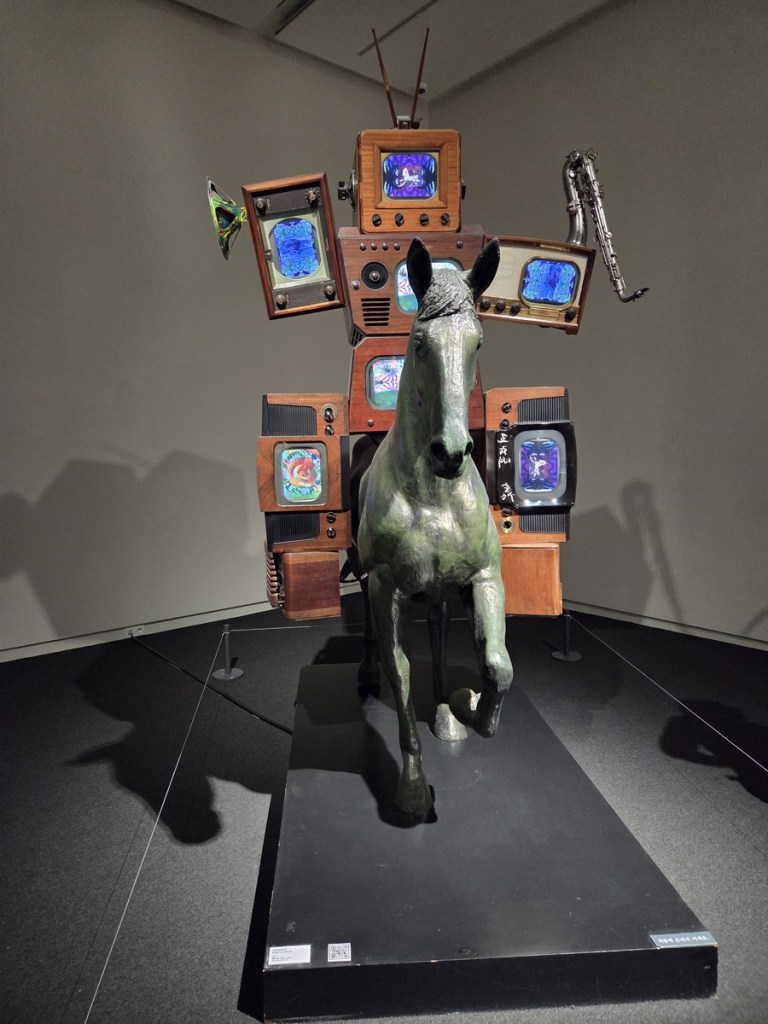
Greeting visitors at the entrance is Ancient Horseman Figure (1991), a work Paik created to commemorate the museum’s opening.
Reinterpreting the familiar Silla-era relic “Clay Figure on Horseback,” the piece depicts a human made of television sets riding a horse — symbolizing the connection between analog and digital, the local and the global.
The concept aligns perfectly with the upcoming APEC Summit in Gyeongju (Oct. 31–Nov. 1) under the theme “Connectivity, Innovation, and Prosperity.”
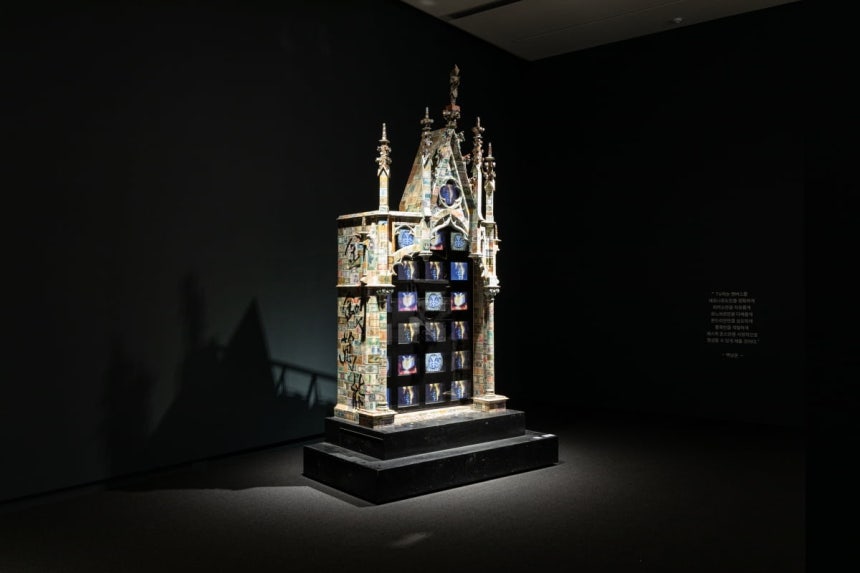
The exhibition also showcases two rarely seen works from Paik’s iconic My Faust series — Economics and Spirituality.
Inspired by Goethe’s Faust, the series explores the human condition and modern value systems.
Economics uses currency and Gothic architecture imagery to critique the worship of capital, while Spirituality employs vivid religious symbols and video structures to question the sustainability of the soul.
Both works have been restored and revealed for the first time in over 30 years since their last display at the National Museum of Modern and Contemporary Art in 1992.
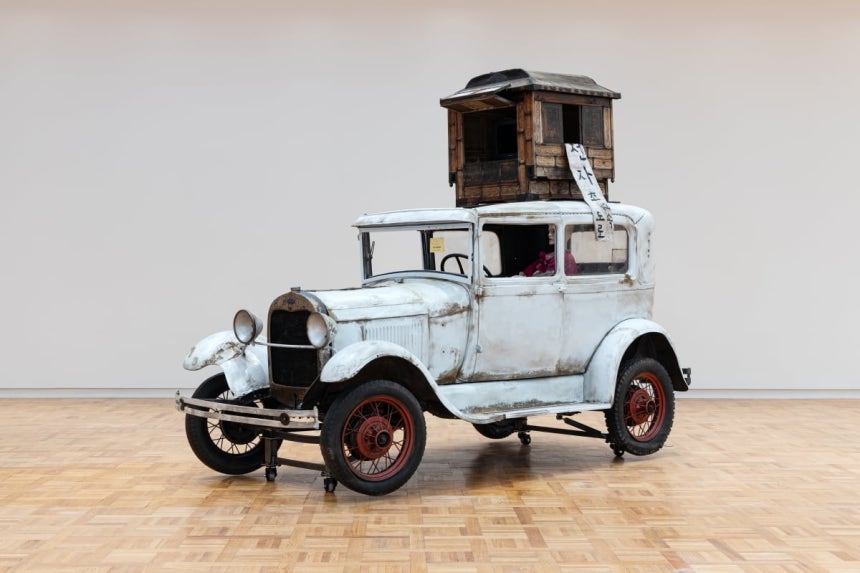
Other major works from the 1980s–1990s are also on view, including Electronic Superhighway–1929 Ford, a visionary piece combining a 1929 Ford car with a wooden palanquin and the phrase “Electronic Superhighway,” representing the fusion of tradition and modernity, East and West, past and future.A museum curator noted, “Paik believed that the world could be united through art. This exhibition best reflects that belief.”
The exhibition runs through November 30 at Wooyang Museum of Contemporary Art, Gyeongju.
 ONLINEKOREANEWS.COM